Subscribe in Bloglines Subscribe in a reader Haywire Custom Guitars #1 Guitar Players Blog from South Carolina

Subscribe to Haywire Custom Guitars #1 Guitar Players Blog

Friday, March 17, 2017

Do You Really Need to Buy NEW Guitar Pickups???


It's always great to hear a players opinion on our guitars because it keeps
us going in the right direction. Here are some excerpts of an article I wrote about finding your sound. Guitarists sometimes see greener grass when it could be its already green enough. They love to customize their guitars. The first thing they want to change are the pickups. Having never built one or tested a guitar pickup most players will forge ahead anyway and make the BIG CHANGE. I have to ask....Why?  Have you tested yours first?  Is it at the max height for best sound?  Is it broken?  If it's picking up sound it's doing the job.

It basically mirrors back the sound. 
It simply hears the sound signal and transfers it to the amp & speaker. When you're singing what do you notice about voice quality when backing off the mike or singing very close? Is there a "sweet spot" where its perfect? Same goes for pickups. There are a few factors you may want to test before you go to the trouble  and expense of adding new pickups.
After all, I use all kinds, all brands and styles in the custom guitars I build guitars for players and still find it difficult to determine if there is much difference between most. They are magnets and copper wire. 
All pickups have the basically the same ingredients.
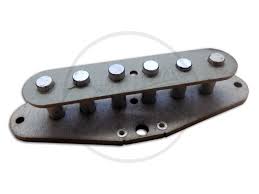
Image result for inside skeletal view of single coil pickup-guitarImage result for copper guitar pickup winding wire


Pickup companies are trying to sell you on their brand, guitar mechanics will give you the facts. Salesman will give you the bull.

So..... try the least expensive methods first before going nuclear. 

First: test the strings and try a string change to a different set of strings. Newer strings are generally stiffer and fresher thus a cleaner tone. Also, try a heavier gauge string to give you more body in the sound.

The second test for you will be more subtle, but it will be very effective. It involves distance and signal strength. The pickups have elevator screws that are there to raise and lower them closer or farther from the strings. You'll just need a Philips head screw driver and turn until you see the pickups move either up or down where you want them and repeat the process until the pickups are within the range where they will hear the strings close up and personal.
Then begin your testing. Play,.... then lower the pickups incrementally between testing sessions so as to try several different levels of signal strength. Only in this way can you hear the differences. Remember, clarity and sound quality have more to do with "Your" ear than what other players hear.
A clean sound for some players may find the pickups very low under the strings whereas a clean sound for other players may find the pickups snugged as close to the strings as physics will allow. Distortions can occur on the extremes of this spectrum

The next test is to check the amp you are playing from. For this test you need a clean control. Be sure there are no obstructions or ways in which players like to process or in some cases "over process" themselves to impeded the pure sound of what the pickup hears. This means plug the guitar directly into the amp with no pedals, stomp boxes or effect in between to change the tone.
Your results will be much better. Some players make the mistake of testing each guitar on the same setting in their search for the ideal sound in a guitar when the result will simply be just testing how different guitars sound on the same setting.
This test will produce results--but not the results you're looking for. Remember, every guitar is set up differently. The strings are generally different ages or brands. So for the perfect empirical evidence needed everything must remain the same.
 Flatten The EQ

So, to make sure you're getting the sound you want to hear from your pickups try different EQ settings on the amp. Be sure that if there are two volume controls turn the channel volume low and the master way up. Start with flat EQ setting the introduce more or less high and low frequencies to get the sound best for your ear and the music that you are playing.
Keep in mind a change of pickups should be one of the last resorts in finding your sound and not the first.
Image result for pickup winding on a drill

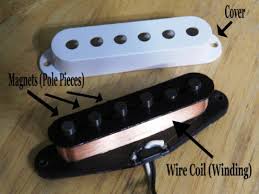
There are so many brands of pickups how do you know where to start?   With some 100 plus pickup manufacturers just in the USA if you decide on a brand then the next problem is which pickup does that brand have that will do the job? At $150 average price for a set of 2 pickups just for a Telecaster how long can you afford to keep making changes in your search for the Holy Grail?  If after these free tests you should decide a pickup change is warranted be sure to take an experienced tech with you to the pickup store. The specs you'll need to be aware of are output and magnet strength. Output, measured in Ohms has nothing to do with tone or clarity just resistance. The magnet strength is important because a larger heavier magnet will cause the strings to be pulled out of tune and thwart sustain so be very careful here so as not to equate magnet strength or Ohms with "better quality". The least expensive fixes are often the most effective. If done properly and methodically you'll be surprised a what you'll find  and how many different tones are already in your pickups if you peek inside.
Image result for view of single coil pickup with cover removed
Richard R Mariner CEO
Haywire Custom Guitars Inc.
843-347-5742

So You've Decided You Need New Pickups-Why?


Image result for view of single coil pickup for guitarPickup Kit for Strat, With Alnico 5 magnets from StewMac. Golden Age Pickups + ElectronicsPickup Kit for Strat, With Alnico 5 magnets from StewMac. Golden Age Pickups + Electronics
It's always great to hear a players opinion on our guitars because it keeps
us going in the right direction. Here are some excerpts of an article I wrote about
finding your sound. Guitarists sometimes see greener grass when it could be 
theirs is green enough. They love to customize their guitars. The first thing they want to change are the pickups. Having never built one or tested a guitar pickup most players will forge ahead anyway and make the BIG CHANGE. I have to ask....Why?  Have you tested yours first?  Is it at the max height for best sound?  Is it broken? If it's picking up sound
it's doing the job.


It basically mirrors back the sound. 
It simply hears the sound signal and transfers it to the amp.  There are a few factors you may want to test before you go to the trouble and expense of adding new pickups.
After all, I use all kinds, all brands and styles in the custom guitars I build to order for players and still find it difficult to determine there is much difference between them. They are just magnets and copper wire. All pickups have the basically the same ingredients.
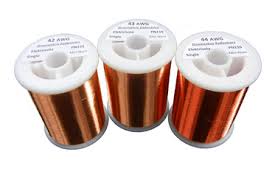
Image result for exploded view of single coil pickups winding kit guitarImage result for copper winding wire for guitar pickups

Before you buy a new car do you ask the mechanic his opinion instead of the salesman?

Pickup companies are trying to sell you on their brand, guitar mechanics will give you the facts. Salesman will give you the bull.

So..... try the least expensive methods first before going nuclear. 

First: test the strings  try a string change to a different string. Newer strings are generally stiffer and fresher
thus a cleaner tone. Also, try a heavier gauge string to give you more body in the sound.

The second test for you will be more subtle, but it will be very effective. It involves distance and signal strength.
The pickups have elevator screws that are there to raise and lower them closer or farther from the strings. You'll just need a Philips head screw driver and turn until you see the pickups move either up or down where you want them and repeat the process until the pickups are within the range where they will hear the strings close up and personal.
Then begin your testing. Play,.... then lower the pickups incrementally between testing sessions so as to try several different levels of signal strength. Only in this way can you hear the differences. Remember, clarity and sound quality have more to do with "Your" ear than what other players hear.
A clean sound for some players may find the pickups very low under the strings whereas a clean sound for other players may find the
pickups snugged as close to the strings as physics will allow. Distortions can occur on the extremes of this spectrum

The next test is to check the amp you are playing from. For this test you need a clean control. Be sure there are no obstructions or ways in which players like to process or in some cases "over process" themselves to impeded the pure sound of what the pickup hears.
This means plug the guitar directly into the amp with no pedals, stomp boxes or effect in between to change the tone.
Your results will be much better. Some players make the mistake of testing each guitar on the same setting in their search for the
ideal sound in a guitar when the result will simply be just testing how different guitars sound on the same setting.
This test will produce results--but not the results you're looking for. Remember, every guitar is set up differently. The strings
are generally different ages or brands. So for the perfect empirical evidence needed everything must remain the same.
 Flatten The EQ

So, to make sure you're getting the sound you want to hear from your pickups try different EQ settings on the amp.
Be sure that if there are two volume controls turn the channel volume low and the master way up.
Start with flat EQ setting the introduce more or less high and low frequencies to get the sound best for your ear and the music
that you are playing.
Keep in mind the change of pickups should be the last resort in finding your sound and not the first.
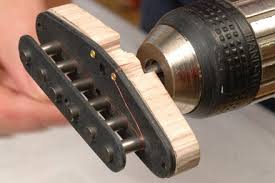
Image result for pickup winding kit guitar

There are so many brands of pickups how do you know where to start?   With some 100 plus pickup manufacturers just in the USA if you decide on a brand then the next problem is which pickup does that brand have that will do the job? At $150 average price for a set of 2 pickups just for a Telecaster how long can you afford to keep making changes in your search for the Holy Grail?  If after these free tests you should decide a pickup change is warranted be sure to take an experienced tech with you to the pickup store. The specs you'll need to be aware of are output and magnet strength. Output, measured in Ohms has nothing to do with tone or clarity just resistance. The magnet strength is important because a larger heavier magnet will cause the strings to be pulled out of tune and thwart sustain so be very careful here so as not to equate magnet strength or Ohms with "better quality". The least expensive fixes are often the most effective. If done properly and methodically you'll be surprised a what you'll find  and how many different tones are already in your pickups if you peek inside.
Monday, February 27, 2017

Why Try A Custom Guitar  ?

Guitars, just like any other instrument out there, comes in a variety of shapes and forms. With that said, almost every guitar will have set of defined elements to it, the same ones we have been using forever. When the topic of custom guitars pops up, you will see a lot of divided opinions. To some, these instruments offer no other value than just a unique look, but to others, it is all about pushing the limits. Those who are just starting out, and have learned about different parts of a guitar in their last guitar lesson, are probably not too hot about custom guitars, which is understandable.   They are expensive, you often have to wait for a long time before they're done, and no one can really guarantee that what you've ordered is going to be as good as you're hoping it will. Next logical question would be, why do people bother with custom guitars then? The easy answer is that some guitar players reach a level where they know exactly what kind of tone they want, but can't find a guitar which meets those requirements. To answer the question with more detail, here are 5 reasons why you should try a custom guitar.  
1.) Get the exact type of tone you need
  When you're building a guitar from scratch, one of the most exciting planning phases is the choice of electronics. Now, what you choose will ultimately depend on the genre of music you're playing and what kind of flavor you like. For example, if you mainly play metal, you can go for a hot-rodded set of active humbuckers. On the other hand, if you're more into jazz, a set of good quality soap bars will probably be more attractive to you. Whatever the case may be, you have full control over this aspect of the guitar. Let's go a step deeper and enter the world of hand wound coils. If you really need a niche type of sound, you can contract someone to build a pickup that is up to your specs. These two gentlemen perfectly explain why a custom made guitar can be awesome:  
2.) Ultimate playing comfort for You
  One of the most important requirements a guitar needs to meet is a decent level of comfort. This is also why you will see a variety of different body shapes and neck profiles available on the market. However, everyone has their own taste so while you might like the shape of one guitar, you could simply find the necks available to be uncomfortable. When you're building a guitar, you can custom order whatever you want. Naturally, luthiers contracted to do the work will help you explore your ideas and lead you to a good setup. Someone who's been playing guitar for decades and is limited in some ways by factory made guitars, can seriously benefit from a custom built axe.  
3.) Increased reliability and Features that You need
  While not many guitar players decide to go for custom made guitars, there's a whole lot of those who customize factory made instruments. Why is this such a popular thing to do? The most common answer is reliability. Maybe that bridge you have is constantly messing with your intonation, maybe the tuners can't hold a key properly. Building a guitar from scratch allows you to pick the best components, which will ensure that you won't run into reliability issues no matter how aggressive your playing style is. On top of bulletproof hardware, other components of the guitar will also be tuned adequately as well. We're talking polished high-quality frets, custom made nut and more. Check out this video series to get a grasp of what the process of building a custom made guitar looks like:  
4.) Sometimes it's necessary to Customize for the Music
  One genre of music where you will see a lot of custom made guitars is jazz. The reason for this is the fact that most serious jazz guitarists use semi-hollow or hollow guitars for this purpose. Since these guitars have a pretty important acoustic factor to them, there is a lot of room for experimentation and improvement. Sure, there are many great factory-made semi-hollows out there, but even the most expensive model on the market is hardly going match what a hand-made guitar of this type can do. This is especially true if the guitar was made by one of the most popular luthiers in the business. When you are so invested in your music, like some jazz guitarists are, you will always be looking for that next level of sound quality.  
5.) Uniqueness factor that works for just You
  No matter what aspect of life, what activity or what type of widely used material object we are talking about, you will always have those who just need to stand out. Custom made guitars offer that to guitar players. With a one of a kind build, you will simply know that no one out there has the same guitar like you. Actually, even if someone asked to you give them the blueprint for your build, the one made for them would still be different from yours. That's the case with all hand made instruments. The point here is that aside from a wide spectrum of practical reasons why you would want a custom-made guitar, there are also those which many would define as petty, but still important.  
Bottom Line for You
 At the end of the day, the whole discussion related to custom made guitars comes down to having the best tool for the job. While there are many exotic custom guitars out there, featuring a plethora of crazy designs and outlandish finishes, there is even more of those who look boring and average. What all of them have in common is a much more refined playing experience and a tone that is custom designed for their owners. If you ever get a chance to try out a custom-made guitar, you should definitely do it. Not only will you understand why these instruments are different, but it will also show you what a custom setup can do for your own experience.
Thank you to our special guest author: Stephan for your article contribution the the Haywire Custom Shop blog.

About the Author:
Stefan is playing guitar for more than 9 years. He is passionate about helping people find the right gear and is also co-founder of: http:www.guitarfella.com - GuitarFella

Monday, February 6, 2017

Sometimes Sending A Guitar Back For A Small "Tweak" Is Not Always Practical


 Many times when I ship a guitar from the humid deep South to a dry climate the neck sometimes will  "hump" up a bit.  This will cause what can be described as a "string buzz". The best way to handle it is with a small truss rod adjustment at the head stock.  Sometimes sending a guitar back for a small "tweak" is not always practical so here is a short guide to a small truss rod tweak that will give immediate results to a "string buzz" issue. The good news-it only takes a few minutes.


Rick, I'm having one fairly big problem with my guitar. I love the way you set the action so low and I don't want to change that, but the two lower strings, E and A, are fret buzzing ferociously, especially down near the head stock. What's the best way to keep the action as low as you set it and still lose the buzz? Filing the frets? Something else?

Please advise. Jim

Hi Jim!  Let me see if I can help you with some easy adjustments. It sounds like a hump in the neck is the problem.
image result for Haywire Custom Guitars guitar truss rod action setups

You won't have to loosen the strings as the adjustment to be made is intended to loosen the truss rod. Guitar strings are only loosened for tightening adjustments to the truss rod. As follows......

Sit down with the guitar between your legs looking directly into the truss rod hole at the head stock. Take an Allen wrench and place through the adjustment hole into the truss rod at the head stock and make sure it's a snug fit. I usually apply a small bit of oil to the end so as to insert and remove it easier.
image result for Haywire Custom Guitars Truss rod entry

Now, imagine a clock. Imagine that the Allen adjuster wrench is the large hand and you want to move it back (counter-clockwise) just 10 minutes (a ten minute interval).

After that adjustment- lay the guitar flat on a counter or floor and gently push down in the middle of the neck to loosen the rod inside the truss rod cavity.
Almost as if you're giving gentle compressions to a heart attack victim.

This should work to loosen any "binding" inside the truss rod cavity and allow the upper strings to get over and humped area caused by the differences in humidity. Tune the strings to pitch. Repeat steps as necessary.
image results for Haywire Custom guitar truss rod movement

Jim-If you need to do it again-remember to go in 10 minute intervals only to avoid over-correction. If you don't feel comfortable then bring it to someone that you know has some experience in adjusting a truss rod and most likely they can handle it.

This should work nicely!
 Rick, I took the guitar to a friend of mine this afternoon and he adjusted the neck and lowered the neck pickup just a tad, and I've got to say, this is my new go-to guitar!  I love the looks, sound, and playability!  You do awesome work!!!

Thank you!

Saturday, February 4, 2017

A Volume Balance Control On An Electric Guitar

The Other Volume Balance, Fade or Pan Control On Your Electric Guitar

In addition to the standard volume control on an electric guitar there is another way to change volume output level. An electric guitar has a hidden volume output control built into it much like a "Fader or Pan Knob" in a stereo system. Players almost never use it because they can't find it-but it's right there. Here is a tip and something we do often in the Custom Shop at Haywire Guitars. If you want to lose or gain a bit of volume in your guitar in a specific area, whether playing live or in a studio, then try this: lower one or both of the pickups. The farther away the strings are from the pickups the "lower" the volume output will be. When the pickups are farther away from the strings the lower the volume will be on that pickup. The pickups will not "pick up" the string vibrations as well and thus - giving you lower volume output. Why is that a good thing?  Raising and lowering a pickup is considered an important and viable adjustment for "equalizing" volume output between two or more pickups. One analogy is to think of the pickup as a microphone and the string as a vocalist. The farther the singer gets from a mike-the lower the volume and less they will be heard.

Each pickup on your guitar has an elevator screw on either side that when turned will bring it closer or farther from the bottom of the strings where it picks up (electrical impulses transferred into) sound. Adjusting the side screws can be used to make an "over-all" change by turning both screws or just one screw on one side of the pickup. The pickup may be raised or lowered depending on how much the player wants to affect the volume and/or tone. The volume can be lowered on one side while being increased on the other side simply by turning the adjustment screws opposite directions. A tone difference will be heard as well.  In that case you'll notice a distinct tilt in the pickup. If a player feels when he moves his selector switch to change to a different pickup selection that there is a noticeable volume change he can simply raise or lower any pickup to compensate for the difference.  Quite often I'll hear a player remark, "This front pickup sounds great-but my back pickup is weak, do I need to buy a new pickup"?  The answer is clearly,"NO".  It's akin to returning your new car to the dealership for a refund because the seat is too far away from the steering wheel. Learn how to make the adjustments that sound good to you. Empower yourself a bit. Learn how to do it so you don't have to rely on someone else.

So, again............the proximity of the pickups from the strings will allow the guitar another source of volume control and sound texture you didn't know was available! Think of this as and extra balance, pan or fade control. This adjustment acts much like a volume control. The pickups on electric guitars are adjustable for height because players want control to either raise or lower "action" but the side adjuster screws of the pickups have another "surprise" benefit which is to change the volume if you choose as well as getting them out of the way to afford lower action. Try it!

Proper pickup adjustment is not as "optional" as you may think but rather, personal. You'll find the sound of the pickups is a bit truer when adjusted to your ears. It's one more way to change your sound to what YOU like as a player......and the best news is: you can do it yourself !
image results for Haywire custom guitars guitar pickup height settings

Monday, January 16, 2017

Haywire Custom Shop: Guitar Neck Reshaping, Thinning Or Shaving A Guitar Neck, Re-Profiling A Guitar Neck

image results for before and after a guitar neck shave

Guitar neck reshaping, thinning or shaving a guitar neck, re-profiling a guitar neck or shaping and duplicating guitar necks? We do it all. If you have a neck that you just love but it’s a bit too thick-we’ll shave it for you.  $135.00 plus return shipping to your door will get your neck shaved to a thickness more comfortable for you.  We’ll also replace the finish on the back to help preserve the wood and keep it smooth and beautiful.

Remember, neck thickness should be chosen for what best fits your hands, not the "tone" it has.  That should be the major consideration in the choice of your new neck. The timbre of a fat neck is noticeable. However, most of the tone comes from your playing technique, your grip, your attack and your hands-not the wood. If you don't feel comfortable with your guitar neck then your best playing will never happen.


Haywire Custom Shop Neck Shaving